Case study · Vanguard

Three pages, three conversion lifts.

Vanguard's UK Personal Investor site was moving to a new content platform. I led the design of a focused rebuild: three high-value pages, redesigned rather than simply migrated. Conversion improved on every one of them.
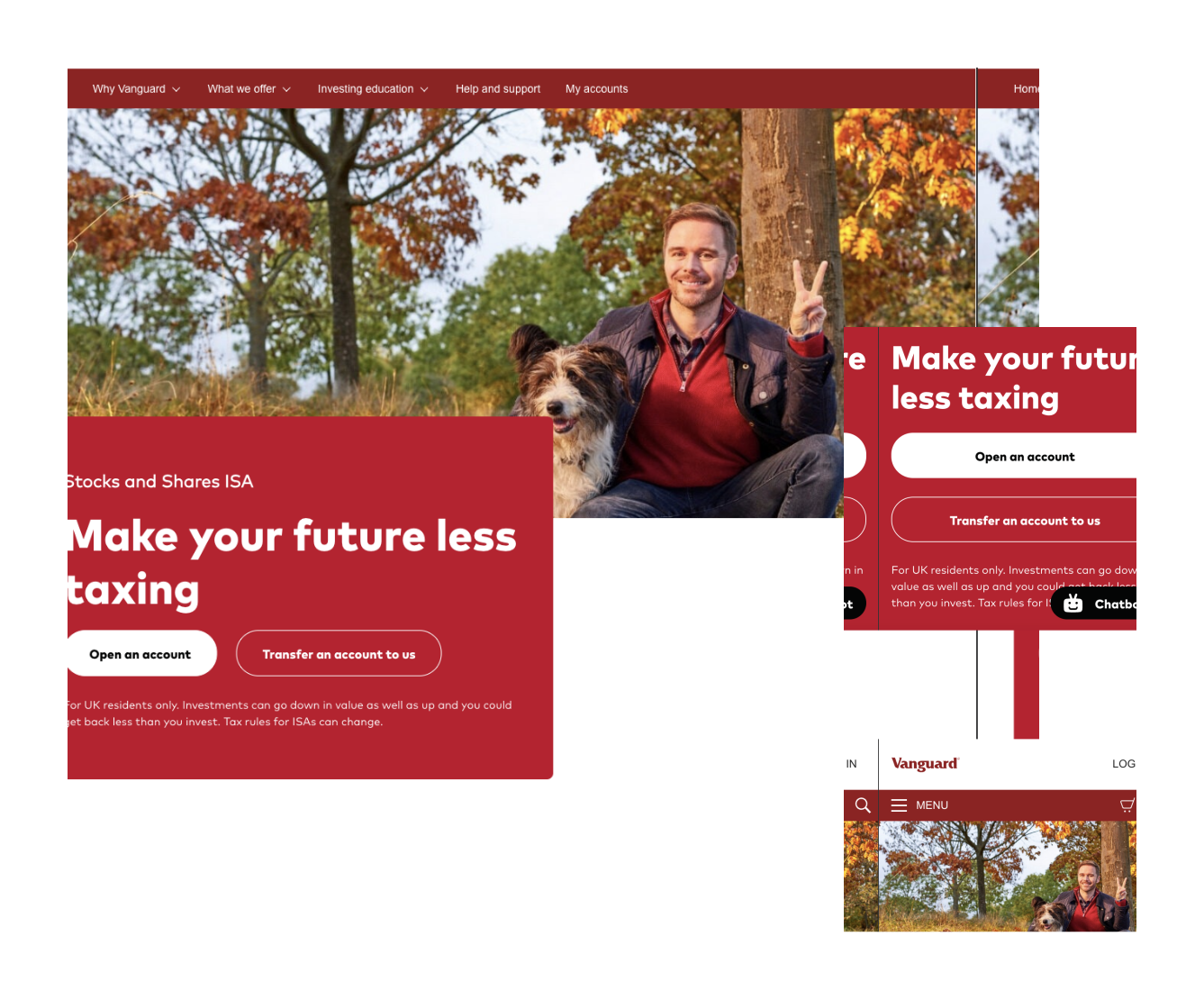
The homepage
The homepage
The ISA page
The ISA page
The SIPP page
The SIPP page
Role  Product Designer Scope  Research, design, prototyping, testing Team  UX writer, Product manager, engineering & content editor
5.4%Homepage conversion, up from 3.9%
16%ISA page conversion, up from 8.1%
25%SIPP page conversion, up from 15%
01  Where it started

Two plans on the table, and a better path between them.

The site was moving to a new platform. One option was a like-for-like migration; another was a full redesign. I recommended a focused rebuild of the pages where evidence showed the greatest opportunity.

01

Carrying it across untouched would waste the one window

A business will not willingly reopen a site that is converting. The migration was the only moment this one would be open, and spending it on a like for like move would have closed it again for years, with every known client pain point carried straight across.

02

Changing all of it overnight was too big a bet

Vanguard has 600,000 customers in the UK and 50 million worldwide. Redesigning every page at once means changing a site that already converts, with no way to tell which change did what and nothing to fall back to if it drops.

vanguardinvestor.co.uk · before
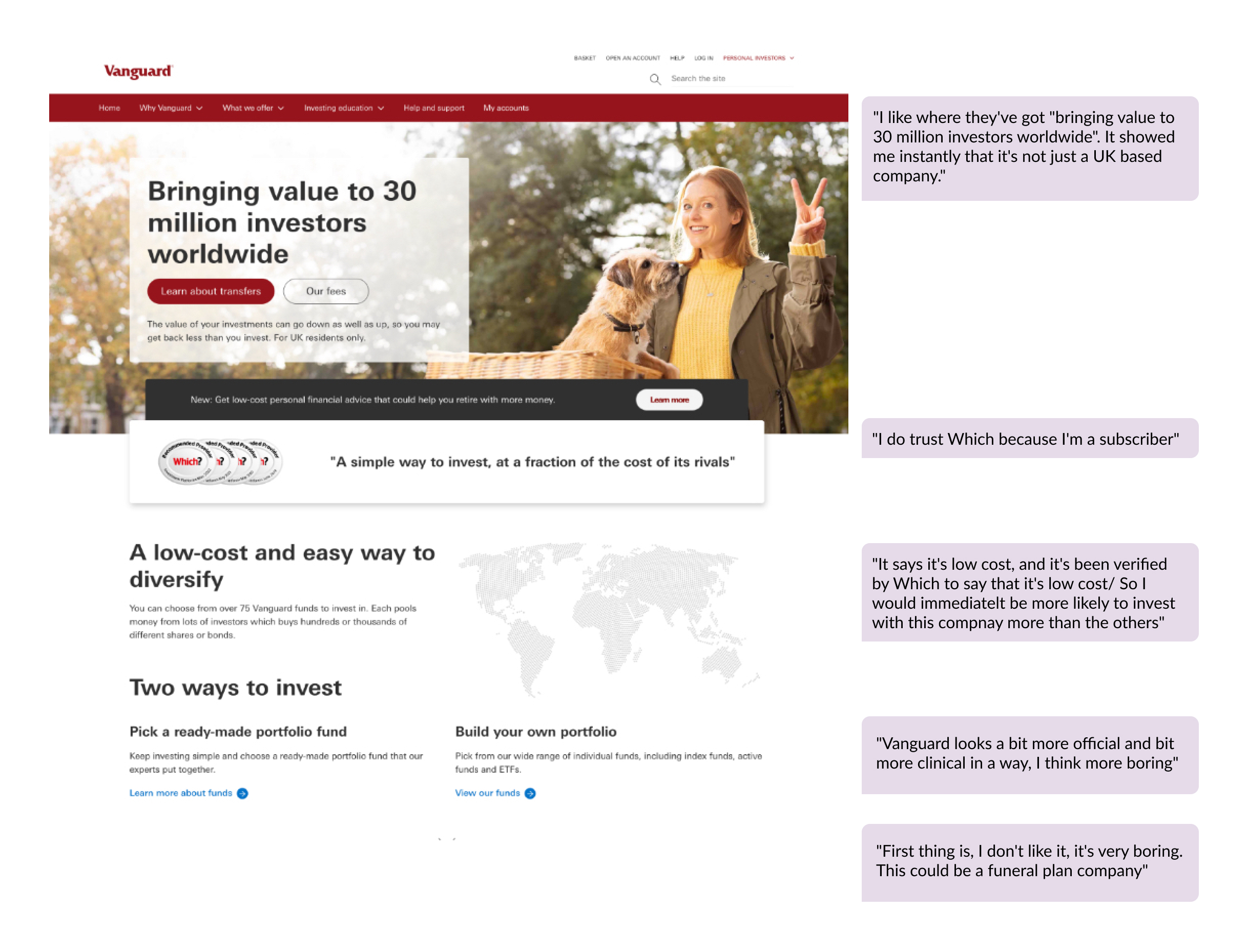
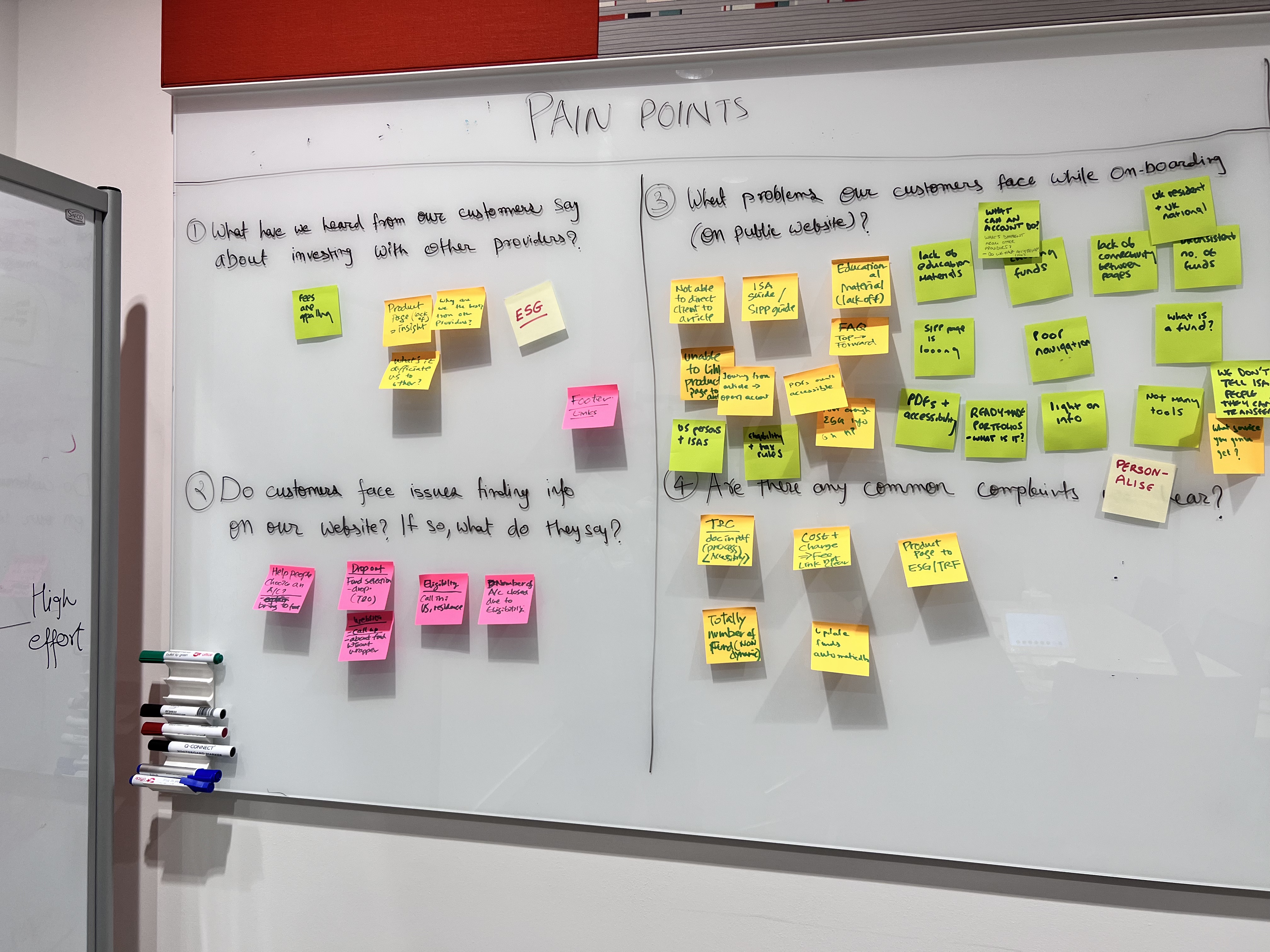
01Trust was the barrier, and nothing on the page addressed it
02Fees were linked to rather than explained
03Nothing at all for the investor who is neither a beginner nor an expert
02  Ownership

Three decisions the project turned on.

Everything after these was execution. These were the key decisions I led with the team, and they shaped the work that followed.

01

Rebuild rather than lift and shift

Migrating the markup untouched was the cheap option. I made the case for a rebuild: the rebrand had landed everywhere except here, the new component library meant every other team would inherit whatever we built, and the known client pain points were all in the pages we were about to copy.

02

Three pages, not the whole site

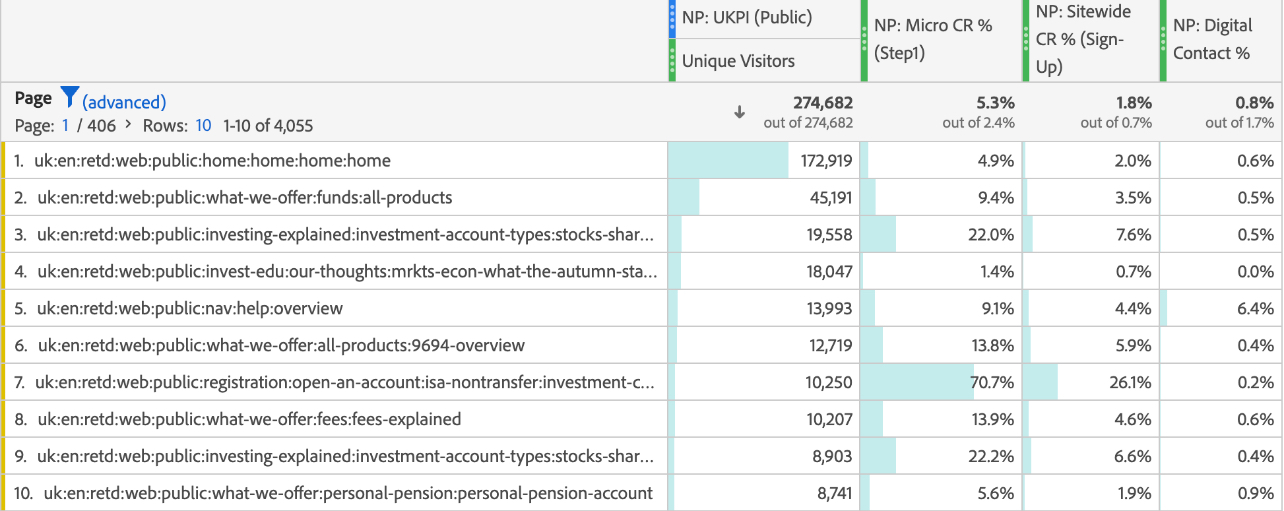
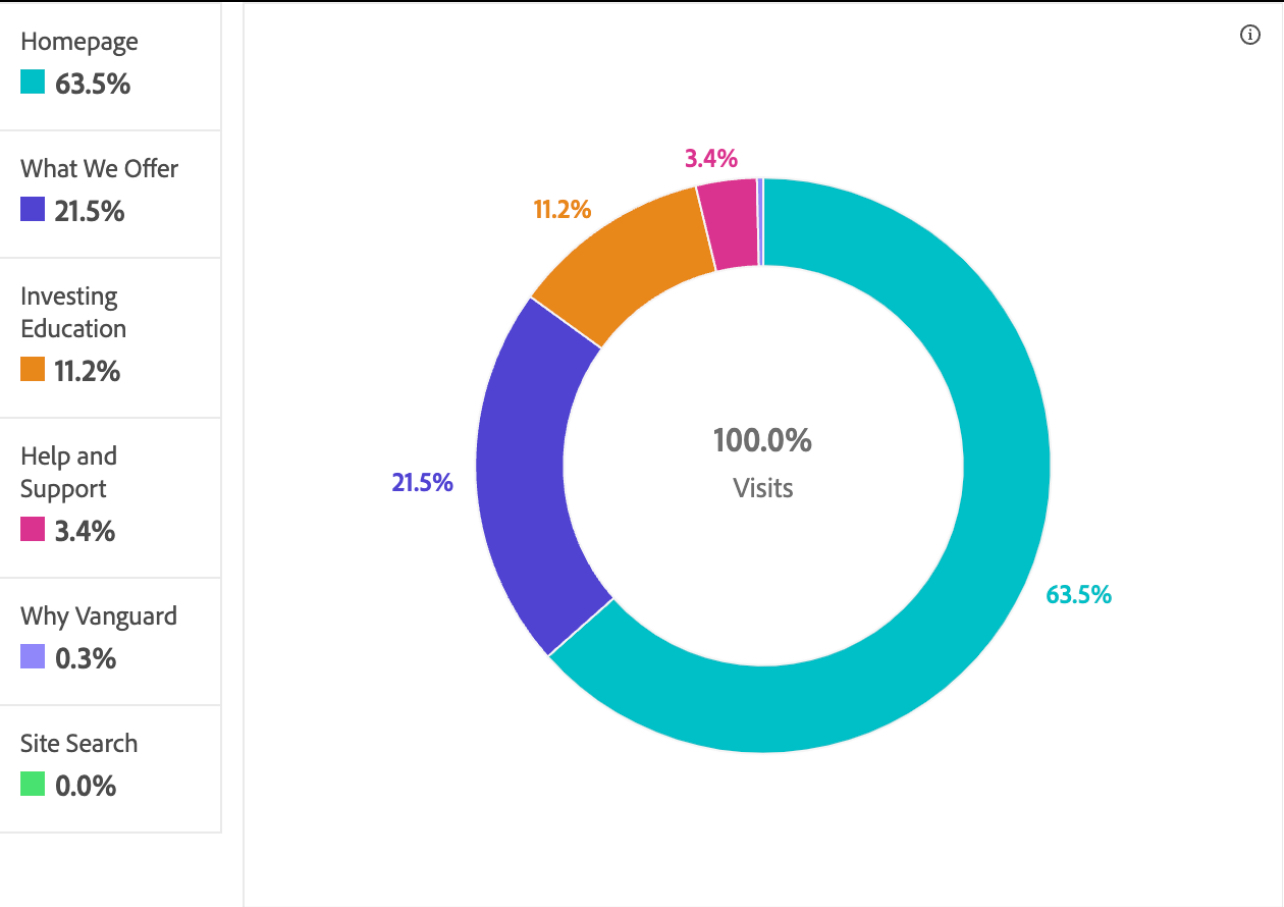
I took the scope out of opinion and into Adobe Analytics instead. After the homepage, the ISA and SIPP product pages were the most visited on the site, so three pages was the smallest change with the largest effect, and a scope the team could validate before extending it further.

03

Design for the investor nobody segments for

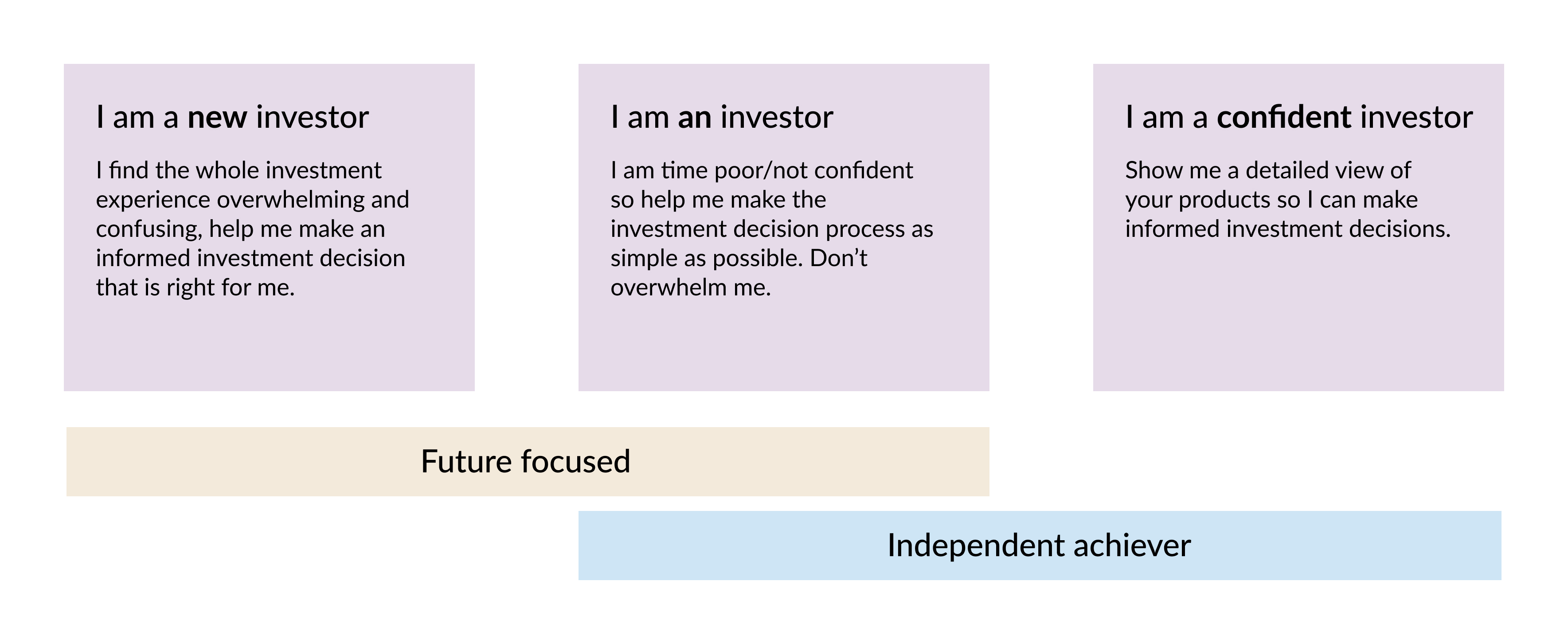
The industry splits investors into confident and nervous. Fifteen interviews said there is a third group and it is the biggest one: people who have invested for years and still would not call themselves confident, and people who understand it perfectly well and simply have no time. Neither is served by a beginner's guide or a fee table.

03  Research and discovery

Five sources, one picture.

No single one of these would have moved a business this size. Together they were hard to argue with, which was the point.

15Qualitative interviews across every stage of the investment journey
4Trends found across every competitor home and product page
2Rounds of usability testing, before and after the redesign
1Session with client services, so daily problems were in the room
Visitors by page in Adobe Analytics
The same view, broken down further
What decided the scope

The analytics, not a workshop. Where people go and where they leave is what chose the three pages, and it is what made the result measurable afterwards. Picking the pages by evidence is also what made the conversation with the business short.

Build trust.

Trust does not come from one source. It takes reputation, assurance, safeguarding and communication at once, and satisfying it is the single biggest gain available.

Empower and educate.

People's idea of who counts as an investor is narrower than the truth. Demystifying it would let far more people in.

Service excellence as standard.

Being proactive and easy to reach matters, and once someone is in touch the service has to build a relationship rather than close a query.

Minimise client effort.

An excellent digital experience across devices is simply expected now, and close to a deal breaker where it is missing.

In depth session with the client service team
The personas, with the missing middle added
04 · Define

There is a middle, and nobody was designing for it.

We were addressing less confident investors and more confident investors. What we were missing was the investor who has been investing for a long time and still does not deem themselves confident, or who simply has no time. That person is not a beginner and does not want to be spoken to as one, and they are not an expert either. It is the reason the pages explain rather than reassure, and the reason fees are stated in full on the page instead of linked to from it.

05  Design

Wireframes, a UI kit, two rounds of testing.

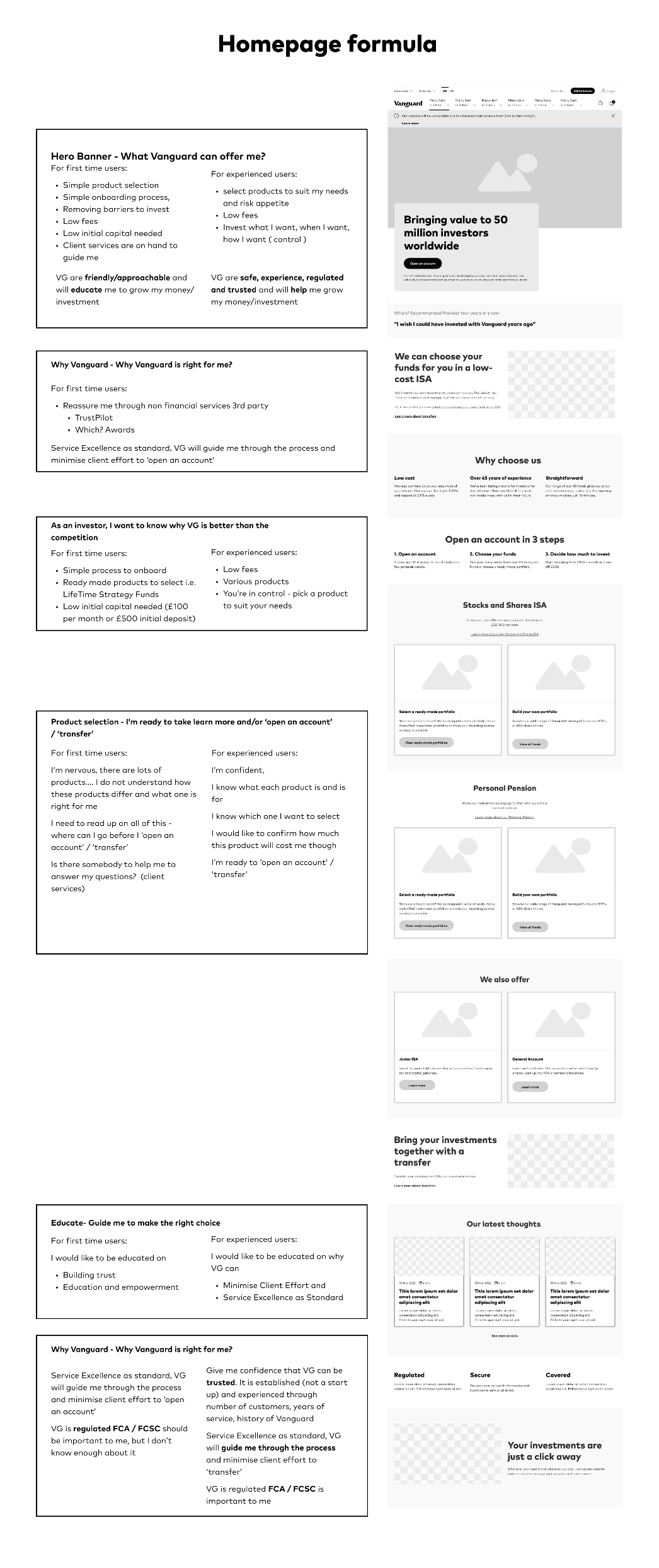
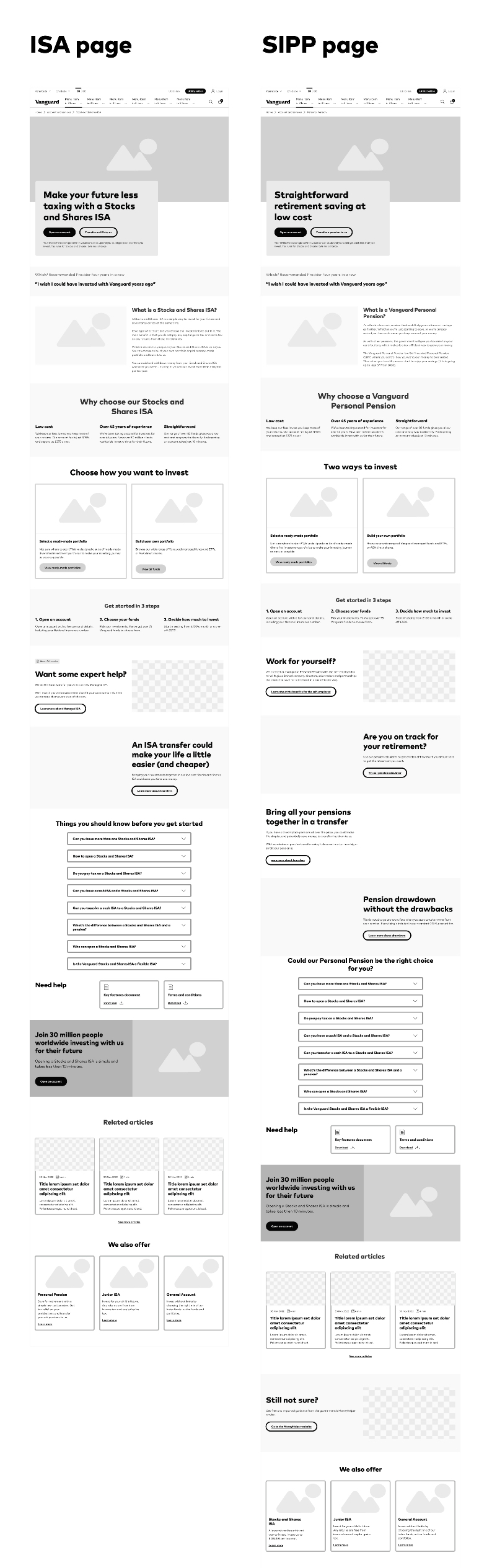
Content design and product design worked on the low fidelity wireframes together, so the words and the layout arrived at the same time rather than one being poured into the other.

FigmaFigJamAdobe Experience Manager Adobe AnalyticsUserTesting.com
01

Wireframes, written and drawn at once

Content design in the room from the first sketch, so nothing had to be rewritten to fit a box that was already built.

02

A UI kit, then a system behind it

I built the kit and put a design system behind the high fidelity work. Same instinct that later became Nebula: decide it once, in one place, rather than in every ticket.

03

Two rounds of testing

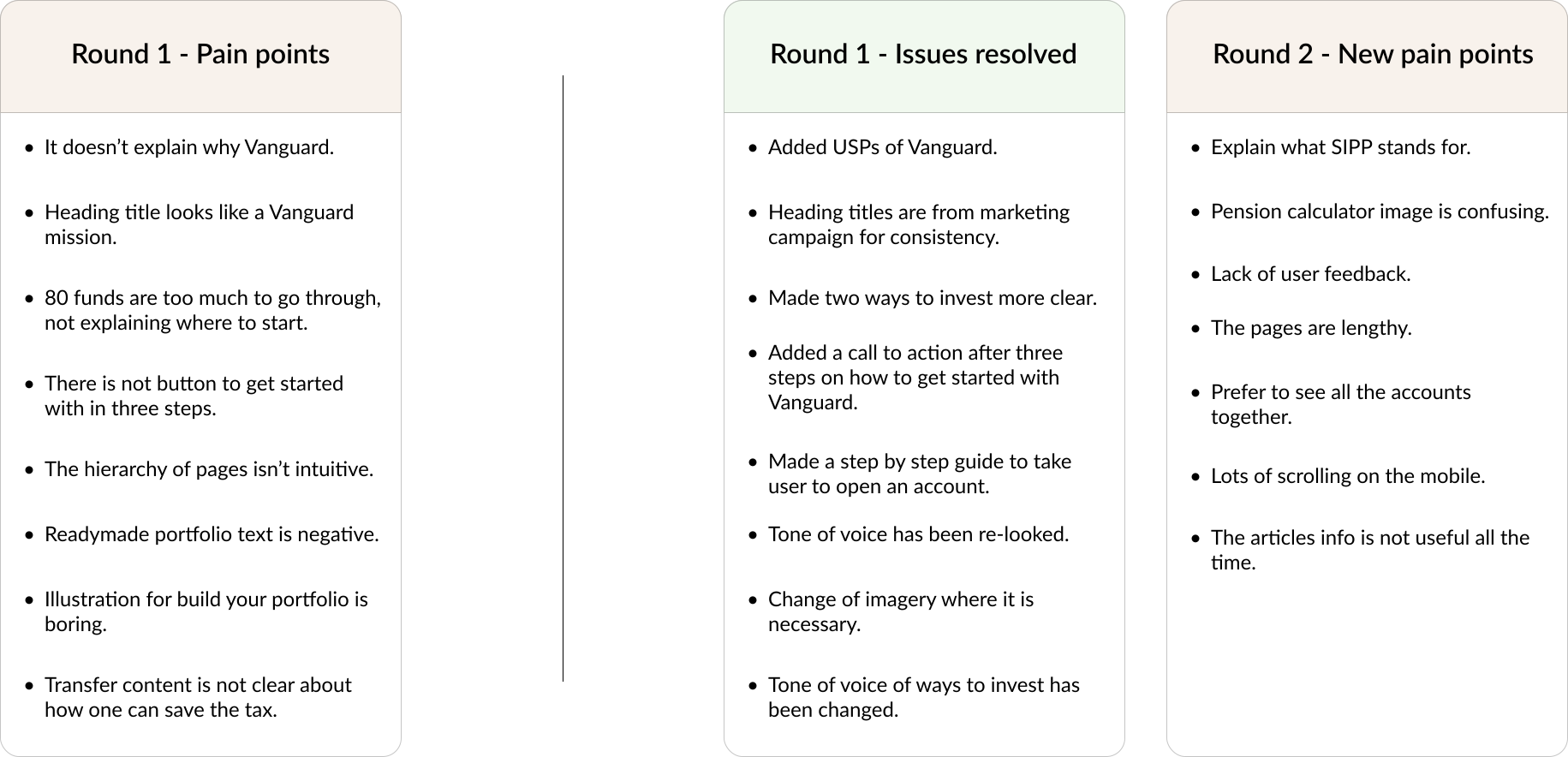
The first round's issues were resolved and new pain points appeared in the second, which is normal and worth saying out loud rather than tidying away.

04

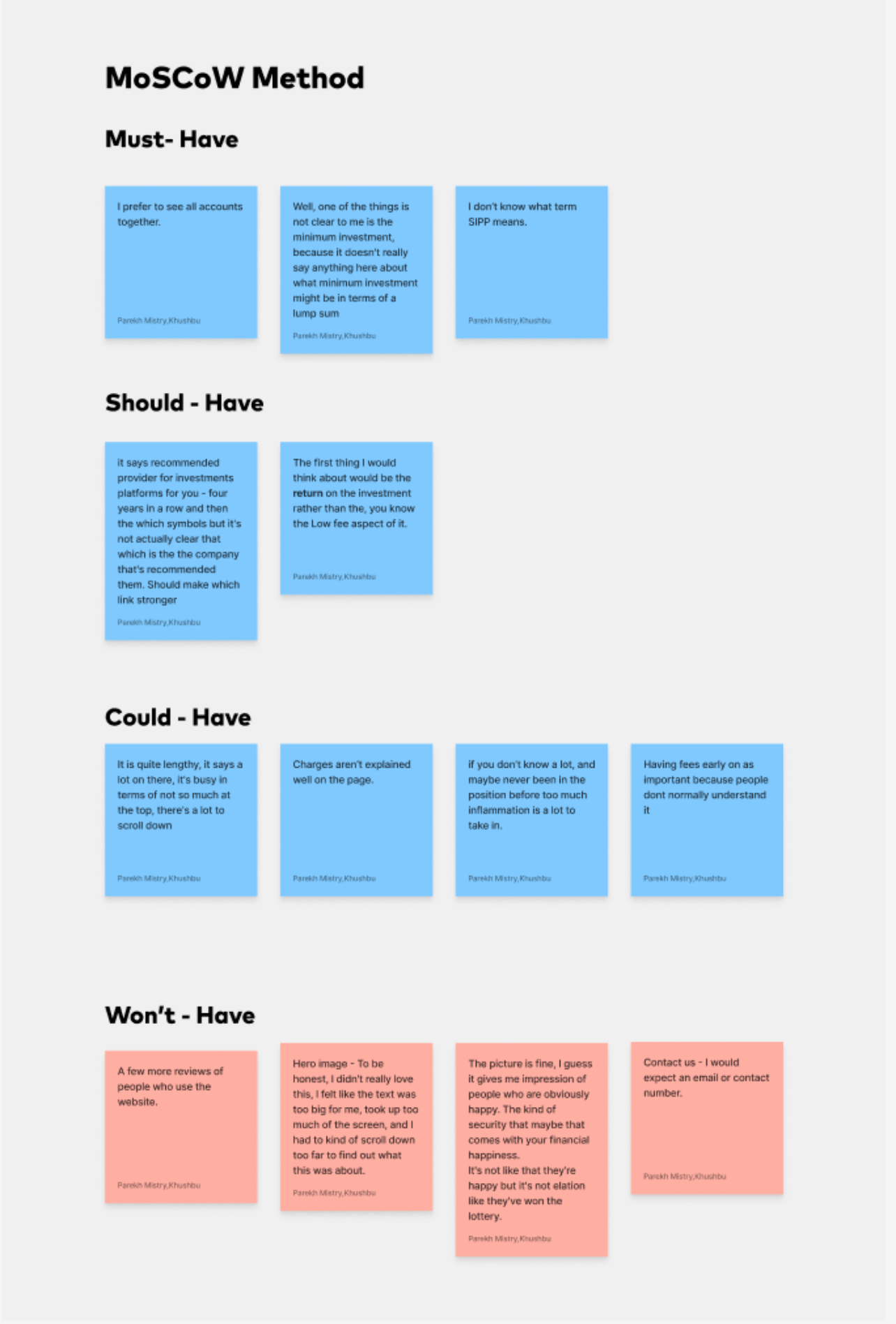
MoSCoW, in front of everyone

We prioritised what made launch in the open, so the cuts were a decision people had watched being made rather than a surprise later.

Homepage, low fidelity
ISA and SIPP, low fidelity
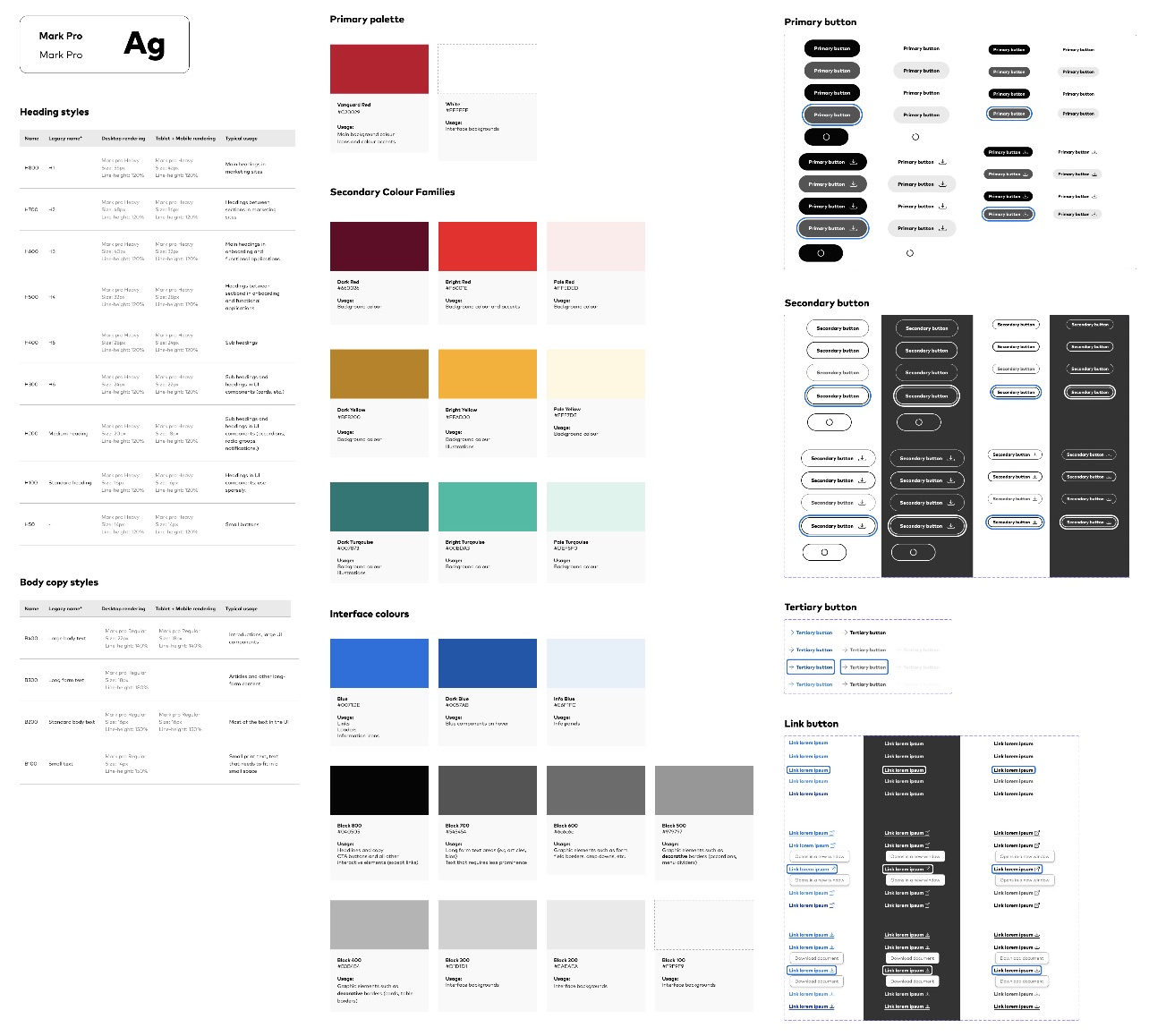
The design system at a glance
Pain points carried into round two
The MoSCoW board
The MoSCoW board
06  The pages

What actually changed, page by page.

Three pages, each with a different job, each measured on its own. The pattern underneath all three is the same: explain the thing before asking anyone to buy it.

vanguardinvestor.co.uk

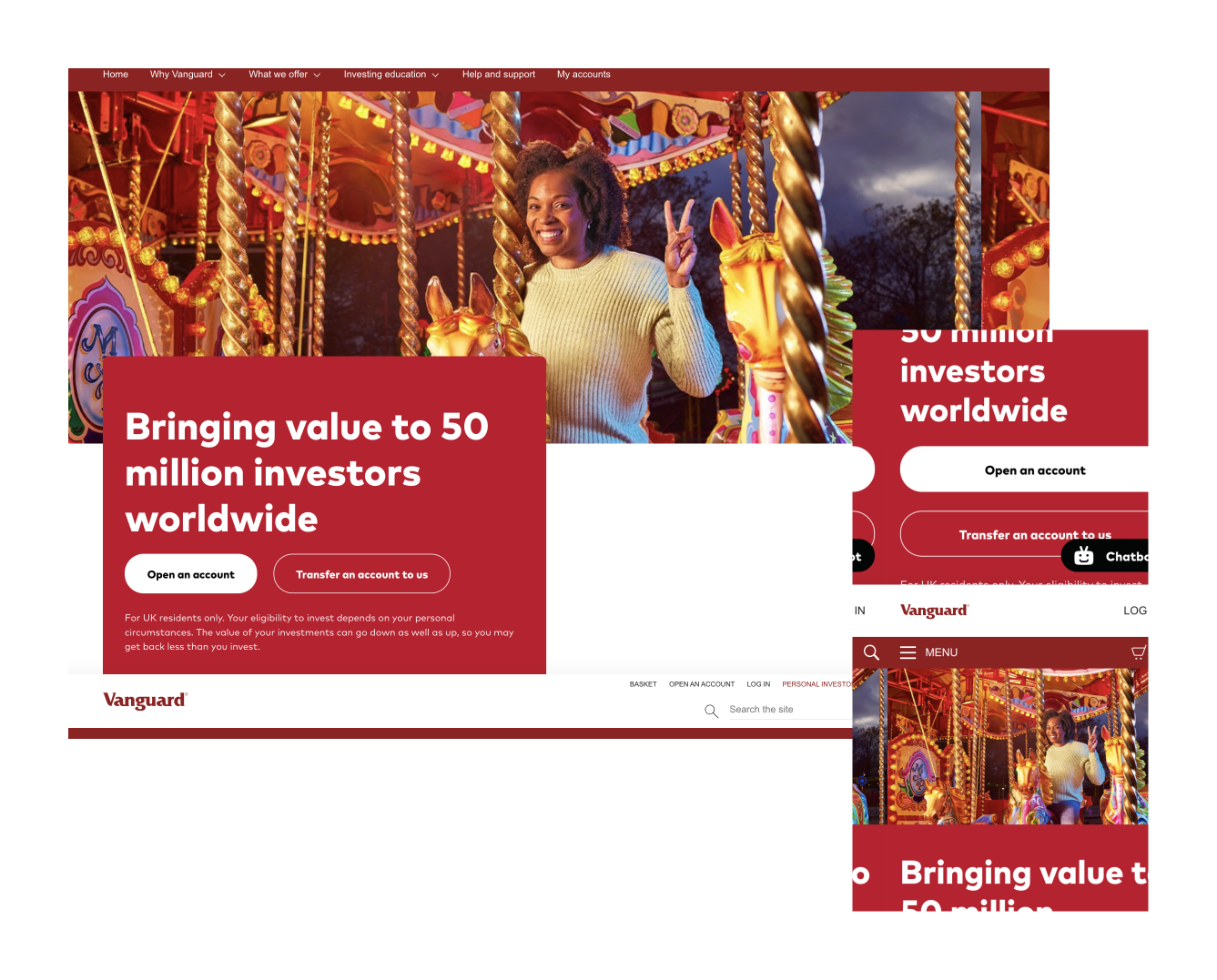
Homepage, a friendly first impression.

The old hero gave a visitor nothing to do. The new one puts the two things most people came for at the top, and then answers what Vanguard is, what it offers and how to invest, in that order, because that is the order the interviews said people ask them in.

AOpen an account and transfer, both up front
BA hierarchy that tells a story
CEducational articles for a first time investor
Result

Conversion from 3.9% to 5.4%, a rise of 38%.

vanguardinvestor.co.uk/isa

ISA, invest with confidence.

The page that carries most of the new money, and the one where trust is either built or lost. The FAQs are not invented: they are the questions the client service team answers most often, moved to where people are already asking them.

AA plain description of what a Stocks and Shares ISA is
BThe two ways to invest, clearly separated
CFees explained in full, and real FAQs
Result

Conversion from 8.1% to 16%, a rise of 96%.

vanguardinvestor.co.uk/sipp

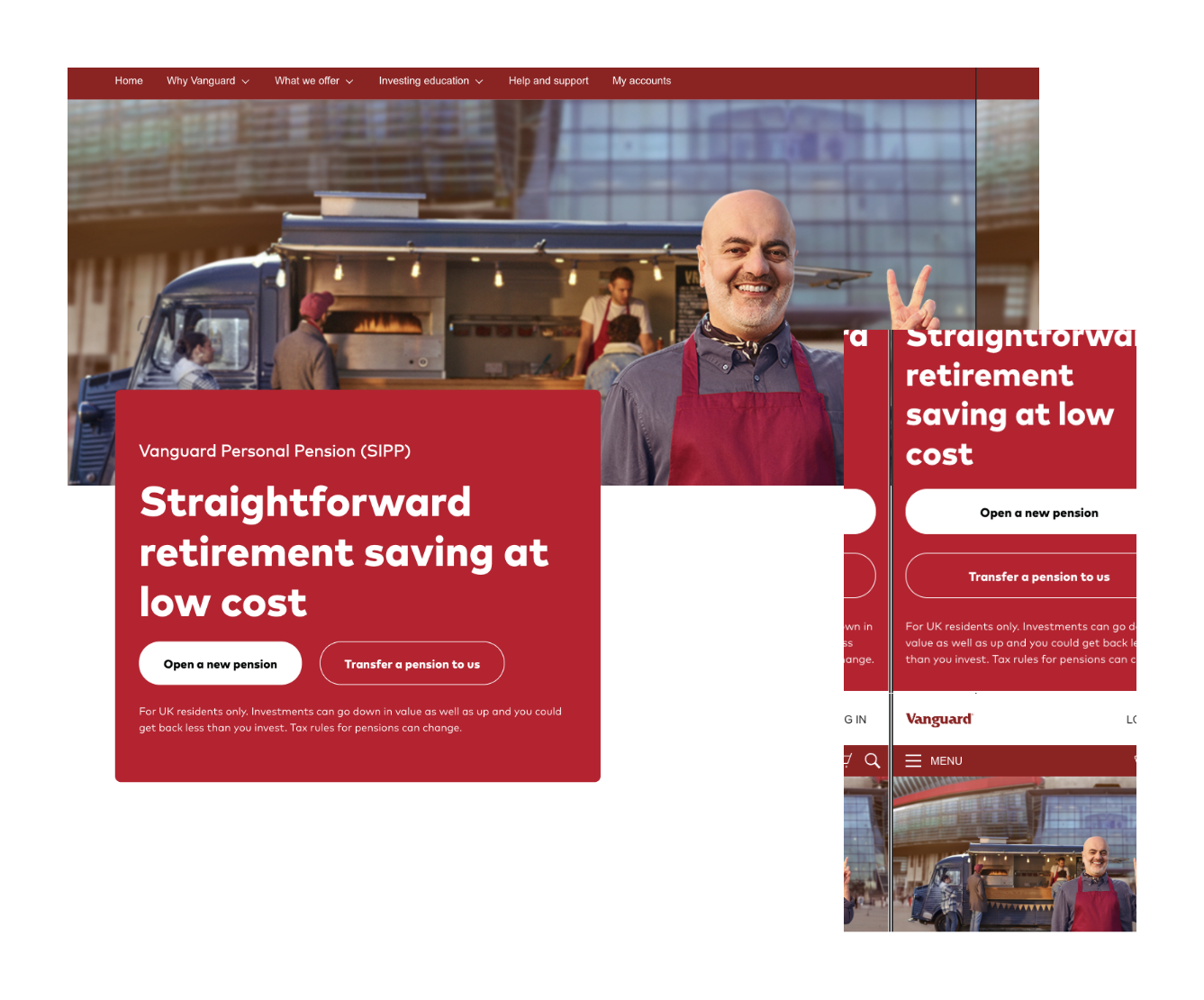
SIPP, get retirement ready.

The hardest of the three to explain, and the one with the largest gap in the old site. Self employed people had nowhere to go at all, which came straight out of the client services session rather than out of the analytics.

AA plain description of a personal pension
BA dedicated section for self employed people
CWithdrawal and tax benefits stated, not implied
Result

Conversion from 15% to 25%, a rise of 72%.

07  Outcome

Every page we touched went up.

Released in January and measured in Adobe Analytics against the same period before launch. Conversion here means visitors who go on to open an account.

Homepage+38%
Before3.9%
After5.4%
ISA page+96%
Before8.1%
After16%
SIPP page+72%
Before15%
After25%
What it earned

The three pages are now the template the rest of the site is rebuilt against.

Which was the whole argument. The site does get redesigned, in the order the evidence pointed at rather than all on one night. Three pages were never the ambition, they were the amount of change worth betting on before anyone had proof, and the proof itself.

08  What I took from it

The design mattered. Evidence made the difference.

01

Evidence makes difficult decisions easier

The most valuable part of this work was using analytics and research to make scope a shared decision, rather than an opinion. The evidence gave the team confidence to invest where it would matter most.

02

Scope an MVP early, and in public

Out of scope requests are what derails a project this size. A plan everyone has already seen is much harder to quietly expand.

03

I would test earlier and rougher

Paper, low fidelity, anything. Every round we ran late cost rework a cheaper round would have caught. And I would push sooner on the pages beyond these three: the evidence to do it was there by launch.